Cleanroom Blog Articles

Stanford-led team shows how to store data using 2D materials instead of silicon chips

A Stanford-led team has invented a way to store data by sliding atomically thin layers of metal over one another, an approach that could pack more data into less space than silicon chips, while also using less energy.

Grand River Aseptic Manufacturing Opens Large-Scale Injectable Fill/Finish Facility, Significantly Increasing Capacity

Grand River Aseptic Manufacturing (“GRAM”), an agile and modern parenteral contract development and manufacturing organization (CDMO), completed its major $60 million expansion project and recently took occupancy.

Coveris Grows Medical Segment With Significant Investments Towards Industry 4.0

In line with the increased focus on the medical market segment, Coveris is taking a gigantic leap forward to modernize their medical packaging production facilities. With an extensive EUR 10 m investment program, Coveris strives to become best in class when it comes to process transparency, cleanliness and quality.

Fully-Enclosed Modular Fill-Finish System created by Sexton Biotechnologies and BioSpherix

Sexton Biotechnologies has announced a new collaboration with BioSpherix Medical. As a tool and technologies partners of the Cell and Gene industry, Sexton and BioSpherix both recognize the need for cost-effective and flexible automation solutions during cell and gene therapy process development. While some upstream bioprocesses have been successfully automated, the final steps of downstream bioprocess, namely Fill-Finish, are often done manually with associated risks of contamination and user error.

Freudenberg Medical Expands Costa Rica Operations

Freudenberg Medical Expands Costa Rica Operations

Freudenberg Medical, a global contract design and manufacturing provider to the medical device industry, is expanding its manufacturing operations in Alajuela, Costa Rica. The expansion project adds 8,600 square feet to the existing facility which includes construction of an additional ISO Class 7 cleanroom for catheter manufacturing and assembly, molding, extrusion, and packaging, as well as added office space. New technology includes an advanced thermoplastic extrusion line which can produce tubing from 4 inches to 170 inches long with capacity of up to 1 million parts per month, plus additional injection molding machines.

read more
Intel to Invest $3.5 Billion to Expand New Mexico Manufacturing Operations

Intel to Invest $3.5 Billion to Expand New Mexico Manufacturing Operations

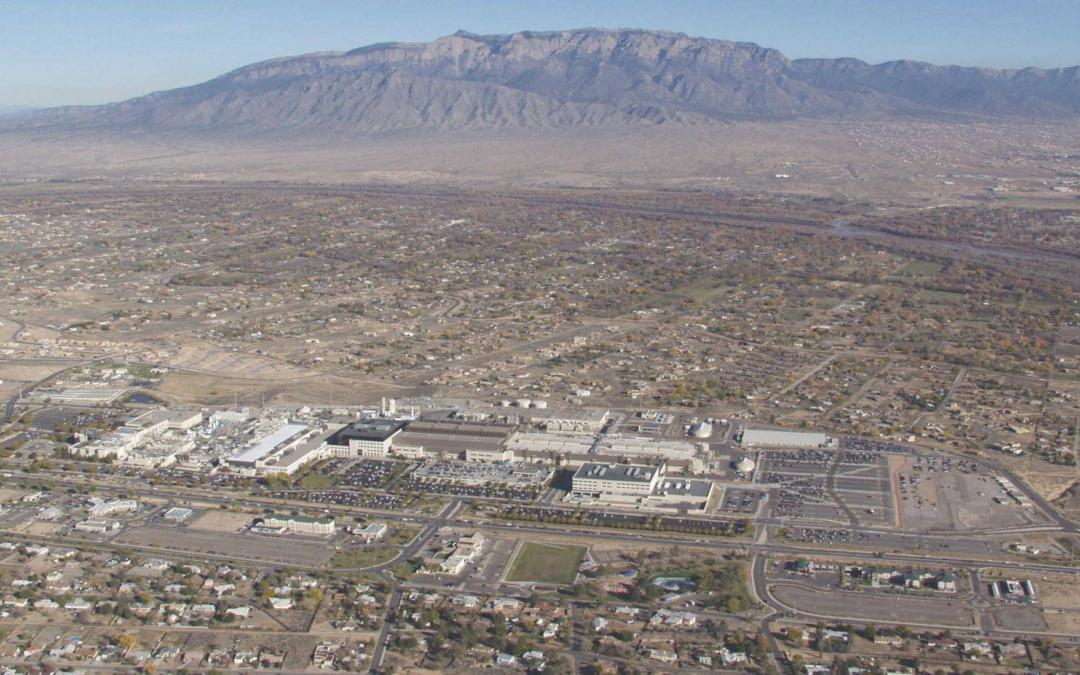
Intel Corporation will invest $3.5 billion to equip its New Mexico operations for the manufacturing of advanced semiconductor packaging technologies, including Foveros, Intel’s breakthrough 3D packaging technology. The multiyear investment is expected to create at least 700 high-tech jobs and 1,000 construction jobs and support an additional 3,500 jobs in the state. Planning activities begin immediately, with construction expected to start in late 2021.

read more
Hospital Superbug Infects Medical Devices

Hospital Superbug Infects Medical Devices

The antibiotic-resistant Acinetobacter baumannii bacterium is one of the most globally harmful bacteria that causes nosocomial infections. Researchers at the University of Turku have discovered that the bacterium attaches to plastic medical devices using tiny finger-like structures. The researchers were able to develop antibodies that prevent the bacterial spread. ​Infections related to hospitals and medical devices form major healthcare problems worldwide. These infections are associated with the ability of pathogens to colonise both biotic and abiotic surfaces.

read more
CRISPR Gene Editing Technology

CRISPR Gene Editing Technology

“CRISPR” (pronounced “crisper”) stands for Clustered Regularly Interspaced Short Palindromic Repeats, which are the hallmark of a bacterial defense system that forms the basis for CRISPR-Cas9 genome editing technology. In the field of genome engineering, the term “CRISPR” or “CRISPR-Cas9” is often used loosely to refer to the various CRISPR-Cas9 and -CPF1, (and other) systems that can be programmed to target specific stretches of genetic code and to edit DNA at precise locations, as well as for other purposes, such as for new diagnostic tools.

read more
Spacecraft Microbiome Discovery

Spacecraft Microbiome Discovery

Engineers work on Opportunity (in its cruise configuration) in a cleanroom at Kennedy Space Center. A very important part of planetary protection is keeping contaminants from humans from riding aboard spacecraft. The pictured engineers are donning “bunny suits” that only allow their eyes to be exposed.

read more
Inline Metrology New Technology

Inline Metrology New Technology

Correlation-free measurements will change inline metrology measuring technology fundamentally and permanently and also the world of manufacturing. The robotic cell AICell trace from ZEISS not only enables automotive manufacturers to make measuring and production more efficient, additionally the new product delivers reliable results starting with the very first component.

read more
Memory Chip Fabrication Process

Memory Chip Fabrication Process

Micron shares their process for memory chip fabrication in their state-of-the-art nanofab cleanrooms
From laptops to mobile phones to connected cars and homes, memory and storage are helping change how the world works, plays, communicates and connects. Check out this behind the scenes look at Micron’s state of the art fabrication process for how memory chips are made – from initial design all the way through testing and packaging.

read more
Nanowires convert heat to electricity more efficiently

Nanowires convert heat to electricity more efficiently

Led by Drs Andrij Vasylenko, Samuel Marks, Jeremy Sloan and David Quigley from Warwick’s Department of Physics, in collaboration with the Universities of Cambridge and Birmingham, the researchers have found that the most effective thermoelectric materials can be realised by shaping them into the thinnest possible nanowires.

read more
Chemical-Feasting Bacteria for Water Decontamination

Chemical-Feasting Bacteria for Water Decontamination

Chemical-Feasting Bacteria Provide New Key for Water Decontamination. NJIT researchers find “catalyst” behind a rare bacteria’s ability to feed on and remove the contaminant 1,4-dioxane from impacted groundwater and drinking water. Scientists at New Jersey Institute of Technology (NJIT) have uncovered a rare enzyme in bacteria with the ability to degrade the “likely human carcinogen” and water contaminant, 1,4-dioxane.

read more
Nanoplastics Threaten Marine Life

Nanoplastics Threaten Marine Life

Plastic nanoparticles – these are tiny pieces of plastic or nanoplastics less than 1 micrometre in size – could potentially contaminate food chains, and ultimately affect human health, according to a recent study by scientists from the National University of Singapore (NUS). They discovered that nanoplastics are easily ingested by marine organisms, and they accumulate in the organisms over time, with a risk of being transferred up the food chain, threatening food safety and posing health risks.

read more
How to use Tacky Mats

How to use Tacky Mats

Tacky Mats help to capture impurities and particulate in areas that require dust and particulate control. Tacky mats have a sticky surface which removes dirt and dust from shoe surfaces before they enter a contamination-free area. This adds a layer of protection for the controlled environment or cleanroom environment.

read more