The World Nano Foundation and pandemic experts say regular use of inexpensive lateral flow rapid antigen mass testing kits is the way to beat COVID-19, its variants and future viruses.

Nanobubbles or ultrafine bubbles are sub-micron (~50nm to ~700nm) gas-containing cavities in aqueous solution with unique physical characteristics that differ from other types of bubbles, and have the ability to change the normal characteristics of water. Nanobubbles can exist on surfaces (surface or interfacial NBs) and as dispersed in a liquid phase (bulk NBs). Their use can contribute greatly to sustainability challenges as environmentally friendly alternative and solutions.
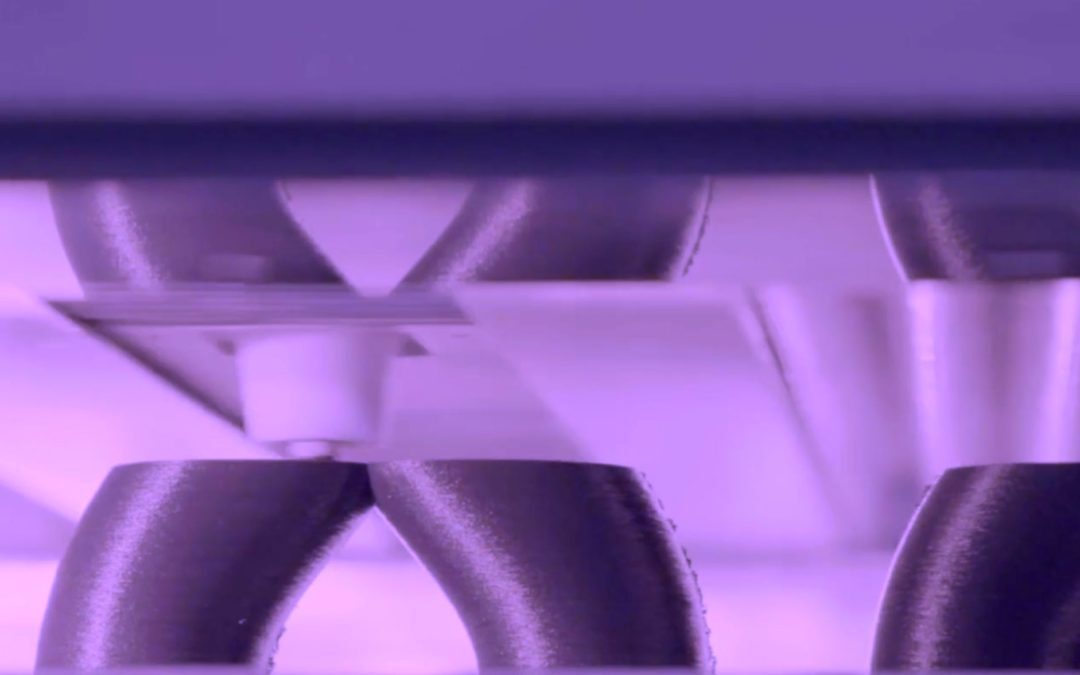
Essentium Introduces Industry-First Anti-Static Material To Advance Additive Manufacturing Applications In The Aerospace And Defense Industries
An international team has developed a ground-breaking single-electron “pump”. The electron pump device developed by the researchers can produce one billion electrons per second and uses quantum mechanics to control them one-by-one. And it’s so precise they have been able to use this device to measure the limitations of current electronics equipment.
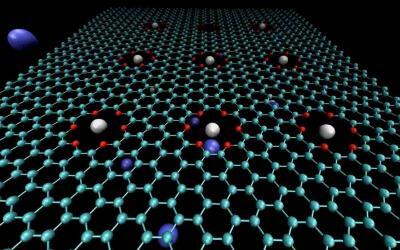
Invigorating the idea of computers based on fluids instead of silicon, researchers at the National Institute of Standards and Technology (NIST) have shown how computational logic operations could be performed in a liquid medium by simulating the trapping of ions (charged atoms) in graphene (a sheet of carbon atoms) floating in saline solution. The scheme might also be used in applications such as water filtration, energy storage or sensor technology.
Electronic circuits are miniaturized to such an extent that quantum mechanical effects become noticeable. Using photoelectron spectrometers, solid-state physicists and material developers can discover more about such electron-based processes. Fraunhofer researchers have helped revolutionize this technology with a new spectrometer that works in the megahertz range.
A team of researchers from the Department of Energy’s Lawrence Berkeley National Laboratory (Berkeley Lab) and UC Berkeley are developing innovative machine learning tools to pull contextual information from scientific datasets and automatically generate metadata tags for each file. Scientists can then search these files via a web-based search engine for scientific data, called Science Search, that the Berkeley team is building.
Researchers at the Department of Energy’s SLAC National Accelerator Laboratory have recorded the most detailed atomic movie of gold melting after being blasted by laser light. The insights they gained into how metals liquefy have potential to aid the development of fusion power reactors, steel processing plants, spacecraft and other applications where materials have to withstand extreme conditions for long periods of time.
DNA drives design principles for lighter, thinner optical displays Lighter gold nanoparticles could replace thicker,...
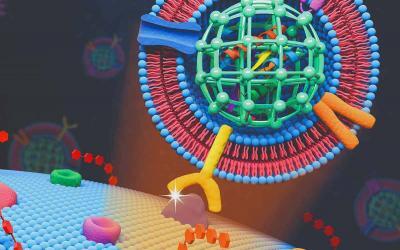
In our design, self-assembly of MOF nanoparticles and encapsulation of proteins are achieved simultaneously through a one-pot approach in aqueous environment. The enriched metal affinity sites on MOF surfaces act like the buttonhook, so the extracellular vesicle membrane can be easily buckled on the MOF nanoparticles.
Researchers uncovered a heterogeneous catalysis strategy that deliberately targets post-C-C coupling reaction intermediates during CO2 electrochemical reduction reaction. It opens avenues to the design of efficient catalysts that selectively produce higher-carbon liquid alcohols.
Velodyne LiDAR Brings World’s Most Advanced LiDAR Sensor. Adding the world’s most advanced LiDAR sensor to the Renovo AWare ecosystem provides fleet operators with the range, resolution and accuracy needed to guide autonomous vehicles reliably and safely through complex driving situations and conditions.