ClassOne Technology, global provider of advanced semiconductor electroplating and surface preparation systems, announced that it has received multiple tool orders from one of the world’s largest RF device manufacturers…
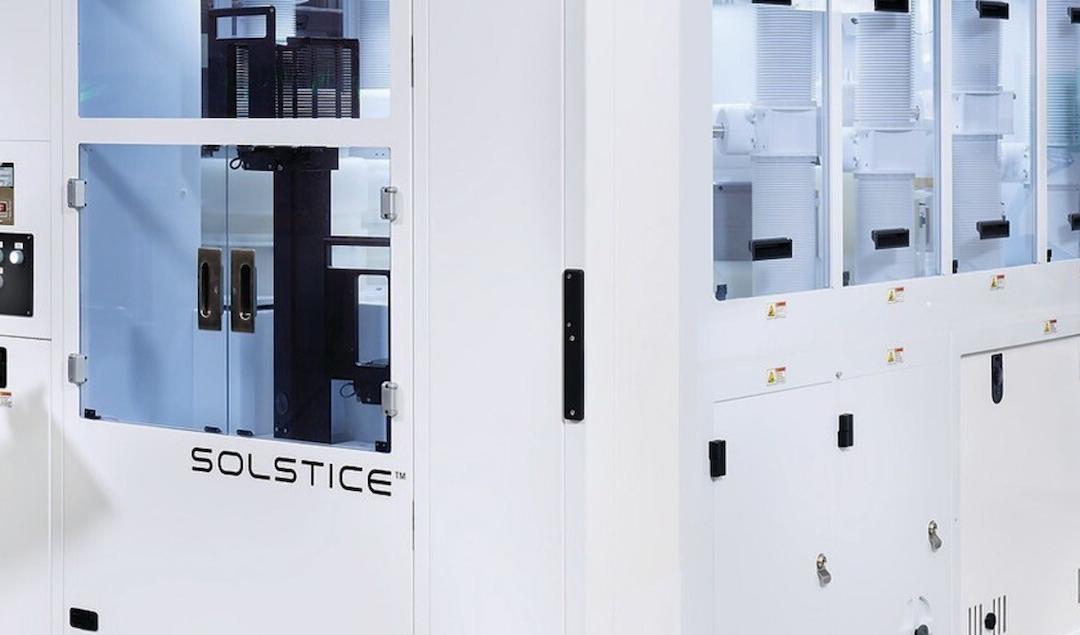
GlobalFoundries (GF), the global leader in feature-rich semiconductor manufacturing, today announced its expansion plans for its most advanced manufacturing facility in upstate New York over the coming years. These plans include immediate investments to address the global chip shortage at its existing Fab 8 facility as well as construction of a new fab on the same campus that will double the site’s capacity.
As New York City begins its early phases of reopening since the onset of the pandemic, cleanroom design and construction services firm Precision Cleanrooms makes its claim in the Big Apple with its first New York City office in the company’s 32-year history. Located in Union Square at 41 East 11th Street, Precision Cleanrooms’ New York office will serve customers in greater New York and the extended Northeastern United States, providing turnkey cleanroom solutions and services for many industries including: pharmaceutical, biotech, medical device, and microelectronics industries.
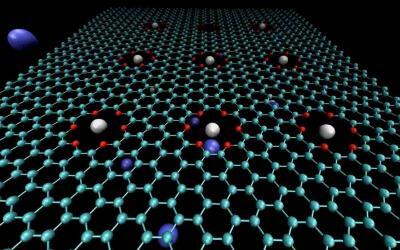
Invigorating the idea of computers based on fluids instead of silicon, researchers at the National Institute of Standards and Technology (NIST) have shown how computational logic operations could be performed in a liquid medium by simulating the trapping of ions (charged atoms) in graphene (a sheet of carbon atoms) floating in saline solution. The scheme might also be used in applications such as water filtration, energy storage or sensor technology.
A team of researchers from the Department of Energy’s Lawrence Berkeley National Laboratory (Berkeley Lab) and UC Berkeley are developing innovative machine learning tools to pull contextual information from scientific datasets and automatically generate metadata tags for each file. Scientists can then search these files via a web-based search engine for scientific data, called Science Search, that the Berkeley team is building.
DNA drives design principles for lighter, thinner optical displays Lighter gold nanoparticles could replace thicker,...
Velodyne LiDAR Brings World’s Most Advanced LiDAR Sensor. Adding the world’s most advanced LiDAR sensor to the Renovo AWare ecosystem provides fleet operators with the range, resolution and accuracy needed to guide autonomous vehicles reliably and safely through complex driving situations and conditions.
Using graphene, one of science’s most versatile materials, engineers from the UCLA Samueli School of Engineering have invented a new type of photodetector that can work with more types of light than its current state-of-the-art counterparts. The device also has superior sensing and imaging capabilities.
Local business leaders across South Wales attended the launch of the new facility, which offers a range of solutions for companies working to develop 21st century technologies. Guests were able to learn more about the refurbished 225 square metre Clean Room facility and the role it plays in assisting businesses across South Wales as part of CS Connected – the world’s first Compound Semiconductor cluster.
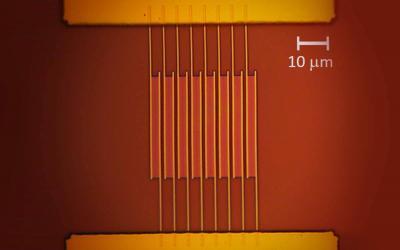
A team headed by the TUM physicists Alexander Holleitner and Reinhard Kienberger has succeeded for the first time in generating ultrashort electric pulses on a chip using metal antennas only a few nanometers in size, then running the signals a few millimeters above the surface and reading them in again a controlled manner. The technology enables the development of new, powerful terahertz components.
Minakem’s HPAPI production will be carried out with an Occupational Exposure Limit (OEL) below 0,1μg/m3/8h. This emphasis on Environment, Health and Safety (EHS) reflects Minakem’s more than 20 years’ experience in continuously monitoring and controlling hazardous working environments, marking its leadership in this area.
Specifically, Zhu and his research team developed a solid polymer electrolyte that can be used in lithium ion batteries to replace the current liquid electrolyte to improve the safety and performance of lithium batteries.