The Semiconductor Industry Association (SIA) today announced worldwide sales of semiconductors were $44.5 billion in June 2021, an increase of 29.2% from the June 2020 total of $34.5 billion. Sales in June were 2.1% more than the May 2021 total of $43.6 billion. Sales during the second quarter of 2021 were $133.6 billion, an increase of 29.2% over the second quarter of 2020 and 8.3% more than the first quarter of 2021. Monthly sales are compiled by the World Semiconductor Trade Statistics (WSTS) organization and represent a three-month moving average. SIA represents 98% of the U.S. semiconductor industry by revenue and nearly two-thirds of non-U.S. chip firms.

Cleanroom Blog Articles
Nanotechnology Solves the Problem of Thermal Insulation for Chemical Tanks and Chemical Plant Process Equipment
Finding a thermal insulation that can withstand the highly corrosive conditions of chemical tanks and chemical plant heat process equipment has been virtually impossible. The constant exposure to acids and bases and everything in between wreaks havoc on conventional thermal insulation and severely limits both the lifespan and performance qualities of the insulation.
Tonix Pharmaceuticals Announces Groundbreaking Ceremony for Massachusetts R&D Facility to House the Advanced Development Center (ADC) for Vaccine Programs
Pharmaceutical Plant in Skidel to Open in October
pharmaceutical plant in Skidel (Grodno Oblast) will be launched in October, the press service of the Council of Republic told BelTA following the meeting between Speaker, curator of the Belarusian-Indian cooperation Mikhail Myasnikovich and Indian investors Jayant Kaushik, Alok Kumar (Lok-Beta Pharmaceuticals (I) Pvt. Ltd) and Director of OOO Novalok Kumar Manoranjan.
Inert Polymer Added to Plastic Solar Cells Enables High Efficiency & Easy Production
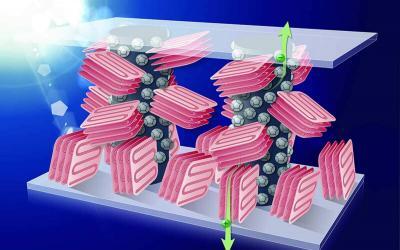
Polymer plastic solar cells remain an industry priority because of their light weight, flexibility and cost-effectiveness. Now scientists from Stony Brook University and the U.S. Department of Energy’s (DOE) Brookhaven National Laboratory (BNL) have demonstrated that these types of solar cells can be more efficient and have more stability based on new research findings.
R&D Operations Hub to Open in Chengdu, China
R&D Operations Hub to Open in Chengdu, China Sanofi to further accelerate its scientific presence with the opening...
Catalent Signs Agreement To Acquire Juniper Pharmaceuticals, Inc.
Catalent, Inc. (NYSE: CTLT), the leading global provider of advanced delivery technologies and development solutions for drugs, biologics and consumer health products, today announced that it has agreed to acquire Juniper Pharmaceuticals, Inc. (NASDAQ: JNPR), including its Nottingham, U.K.-based Juniper Pharma Services division.
Biosensor Chips based on Copper and Graphene Oxide
Russian researchers from the Moscow Institute of Physics and Technology have developed biosensor chips of unprecedented sensitivity, which are based on copper instead of the conventionally used gold. Besides making the device somewhat cheaper, this innovation will facilitate the manufacturing process.
Cardiology Laboratory Serves Bayer Strategic Alliance
Bayer Strategic Partnership formed. Bayer and the Broad Institute of MIT and Harvard announced the launch of the joint Precision Cardiology Laboratory, which will pursue novel scientific insights to enable the development of new therapies for patients with cardiovascular diseases such as heart failure.
Quantum Computing One Step Closer
An international team has developed a ground-breaking single-electron “pump”. The electron pump device developed by the researchers can produce one billion electrons per second and uses quantum mechanics to control them one-by-one. And it’s so precise they have been able to use this device to measure the limitations of current electronics equipment.
Robotic Hand with Brainy Skin Enables Sense of Touch
University of Glasgow’s Professor Ravinder Dahiya has plans to develop ultra-flexible, synthetic Brainy Skin that ‘thinks for itself’. The super-flexible, hypersensitive skin may one day be used to make more responsive prosthetics for amputees, or to build a robotic hand with a sense of touch.
Nanofluidic Computing Logic Simulated by NIST Researchers
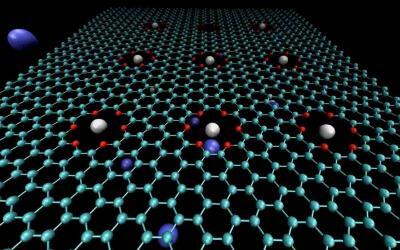
Invigorating the idea of computers based on fluids instead of silicon, researchers at the National Institute of Standards and Technology (NIST) have shown how computational logic operations could be performed in a liquid medium by simulating the trapping of ions (charged atoms) in graphene (a sheet of carbon atoms) floating in saline solution. The scheme might also be used in applications such as water filtration, energy storage or sensor technology.