Optical Clean Room Industry Articles

Picosun delivers ALD technology to ams OSRAM

Picosun Group delivers cutting-edge Atomic Layer Deposition (ALD) technology to ams OSRAM for volume manufacturing of optical semiconductor devices…

GlobalFoundries Plans to Build New Fab in Upstate New York in Private-Public Partnership to Support U.S. Semiconductor Manufacturing

GlobalFoundries (GF), the global leader in feature-rich semiconductor manufacturing, today announced its expansion plans for its most advanced manufacturing facility in upstate New York over the coming years. These plans include immediate investments to address the global chip shortage at its existing Fab 8 facility as well as construction of a new fab on the same campus that will double the site’s capacity.

Precision Cleanrooms New York City Office Grand Opening

As New York City begins its early phases of reopening since the onset of the pandemic, cleanroom design and construction services firm Precision Cleanrooms makes its claim in the Big Apple with its first New York City office in the company’s 32-year history. Located in Union Square at 41 East 11th Street, Precision Cleanrooms’ New York office will serve customers in greater New York and the extended Northeastern United States, providing turnkey cleanroom solutions and services for many industries including: pharmaceutical, biotech, medical device, and microelectronics industries.

GLOBALFOUNDRIES Breaks Ground On New Fab In Singapore

GLOBALFOUNDRIES® (GF®), the global leader in feature-rich semiconductor manufacturing, today announced it is expanding its global manufacturing footprint with the construction of a new fab on its Singapore campus. In partnership with the Singapore Economic Development Board and with co-investments from committed customers, GF’s more than US $4B (S$5B) investment will play an integral role in meeting the growing demand for the company’s industry-leading manufacturing technologies and services to enable companies worldwide to develop and scale their business.

General Atomics Expands Space Systems Development Infrastructure

General Atomics Expands Space Systems Development Infrastructure

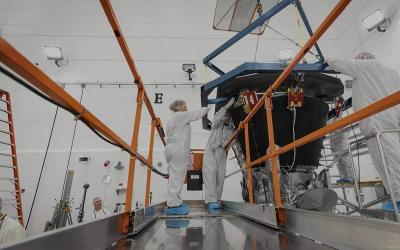
General Atomics Electromagnetic Systems announced today that it has expanded its space systems infrastructure with the addition of a 7,500 ft2 Class 10,000 / ISO 7 cleanroom facility in San Diego, CA that will enable high-volume Optical Communication Terminal (OCT) production. The multifaceted facility can facilitate fabrication of up to 300 OCTs per year.

read more
Neural Circuits Controlled By Sound Waves

Neural Circuits Controlled By Sound Waves

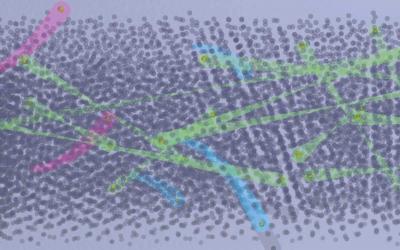
In the maze of our brains, there are various pathways by which neural signals travel. These pathways can go awry in patients with neurological and psychiatric diseases and disorders, including epilepsy, Parkinson’s, and obsessive-compulsive disorder. Researchers have developed new therapeutic strategies to more precisely target neural pathways involved in these conditions, but they often require surgery. 

read more
Manipulating single atoms with an electron beam

Manipulating single atoms with an electron beam

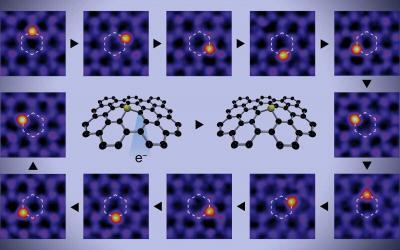
An electron beam with sub-atomic precision, allowing scientists to directly see each atom in two-dimensional materials like graphene, and also to target single atoms with the beam. Each electron has a tiny chance of scattering back from a nucleus, giving it a kick in the opposite direction.

read more
Nanomaterial Superconductivity Lost? Physicists Uncover Why

Nanomaterial Superconductivity Lost? Physicists Uncover Why

Scientists discovered the phenomenon 30 years ago, but the mechanism for superconductivity remains an enigma because the majority of materials are too complex to understand QPT physics in details. A good strategy would be first to look at less complicated model systems.

read more
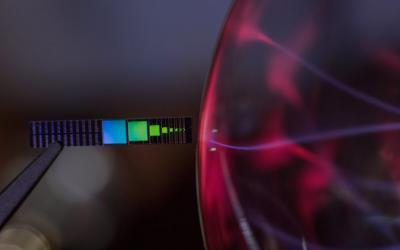
Quantum Transistor for Semiconductor Applications Enables Photon Computing

Quantum Transistor for Semiconductor Applications Enables Photon Computing

Quantum computers will need analogous hardware to manipulate quantum information. But the design constraints for this new technology are stringent, and today’s most advanced processors can’t be repurposed as quantum devices. That’s because quantum information carriers, dubbed qubits, have to follow different rules laid out by quantum physics.

read more