With Fisher Group’s high level of knowledge in supplying HVAC solutions to commercial and industrial markets, the acquisition also enhances Johnson Controls’ full HVAC offering across multiple customer segments.

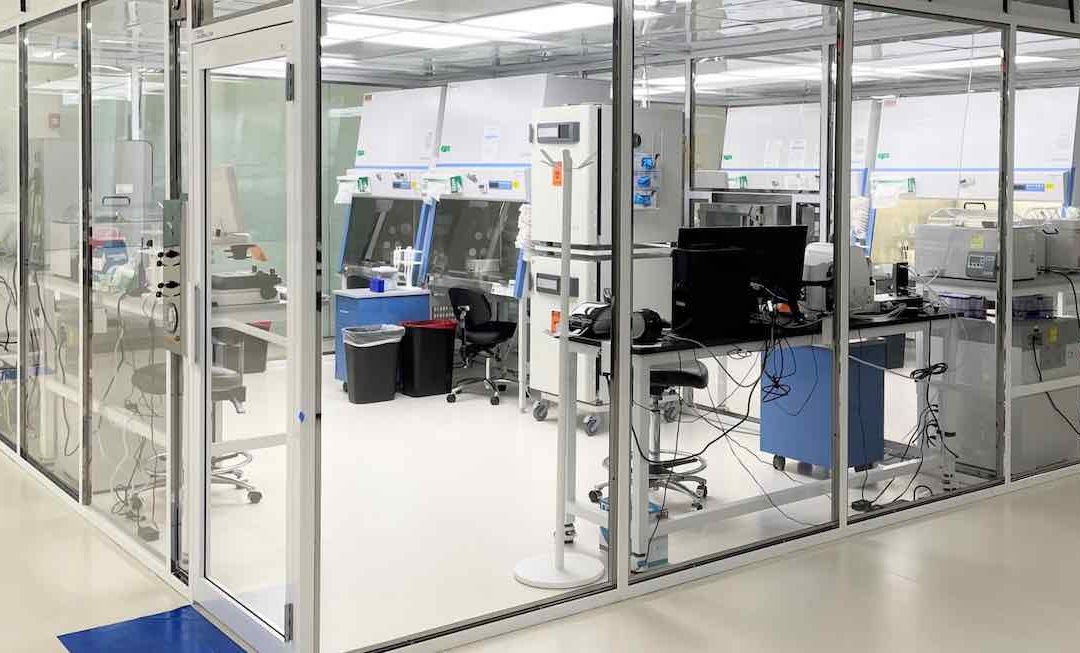
General Atomics Electromagnetic Systems announced today that it has expanded its space systems infrastructure with the addition of a 7,500 ft2 Class 10,000 / ISO 7 cleanroom facility in San Diego, CA that will enable high-volume Optical Communication Terminal (OCT) production. The multifaceted facility can facilitate fabrication of up to 300 OCTs per year.
Signature Biologics, LLC., today announced their expanded operations footprint to include a new 36,000 sq ft facility in Irving, TX. This newly constructed space mirrors Signature Biologics’ transparency in doing business with open floor plan and floor-to-ceiling views into its fully equipped manufacturing and R&D laboratory spaces.
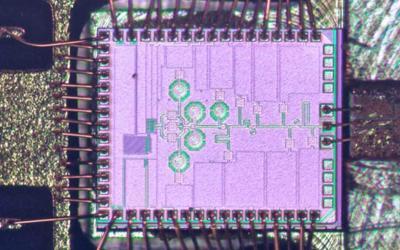
MIT researchers have developed the first molecular clock on a chip, which uses the constant, measurable rotation of molecules — when exposed to a certain frequency of electromagnetic radiation — to keep time. The chip could one day significantly improve the accuracy and performance of navigation on smartphones and other consumer devices.
Neutrinos, Italian for “little neutral ones,” are often described as “ghost particles,” for their extremely weak interactions with ordinary matter. Indeed, billions of neutrinos stream through our fingernails every second, without ruffling so much as a molecule of matter. And yet, on Sept. 22, 2017, the IceCube Neutrino Observatory, based at the Amundsen-Scott South Pole Station, detected a neutrino in signals picked up by its detectors buried deep in the Antarctic ice. Researchers there quickly sent out alerts to ground- and space-based telescopes in hopes of finding the neutrino’s cosmic source.
Gerresheimer will acquire the Swiss technology company Sensile Medical and thereby significantly expand its business offerings. For the Sensile Medical business, this will open up new opportunities and synergies with existing and potential new customers.
The research involved kinesin proteins: tiny, protein-based motors that interact with microtubules inside cells. The motors convert chemical energy into mechanical energy to generate the directional movements and forces necessary to sustain life. Microtubules are microscopic tubular structures that have two distinct ends: a fast-growing plus end and a slow-growing minus ends. Microtubules help make up a cell’s skeleton.
Today PPC Flexible Packaging announced it has completed the first phase of a greater than $2 million facilities and equipment investment aimed at expanding and further upgrading production capacities for its Precision Clean™ cleanroom packaging business. The company purchased its Buffalo Grove based business as Fisher Container Corporation in February 2017.
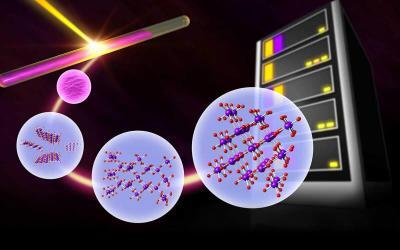
X-Ray Experiment – Over the last decade, scientists have used supercomputers and advanced simulation software to predict hundreds of new materials with exciting properties for next-generation energy technologies. Now they need to figure out how to make them. To predict the best recipe for making a material, they first need a better understanding of how it forms, including all the intermediate phases it goes through along the way – some of which may be useful in their own right.
Using light for next generation data storage technology Tiny, nano-sized crystals of salt encoded with data using...
“It was as long ago as 1991 when we discovered that, in many elderly people infected with HSV1, the virus is present also in the brain, and then in 1997 that it confers a strong risk of Alzheimer’s disease in the brain of people who have a specific genetic factor.”
In the maze of our brains, there are various pathways by which neural signals travel. These pathways can go awry in patients with neurological and psychiatric diseases and disorders, including epilepsy, Parkinson’s, and obsessive-compulsive disorder. Researchers have developed new therapeutic strategies to more precisely target neural pathways involved in these conditions, but they often require surgery.